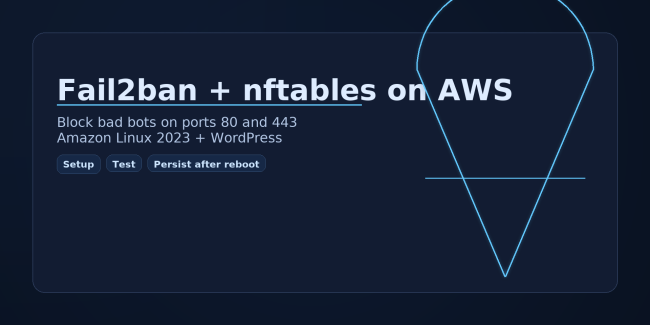
Fail2ban And Nftables On AWS Linux For WordPress
A step-by-step guide to wiring Fail2ban directly to nftables on AL2023, blocking bots on ports 80 and 443, avoiding firewalld conflicts, and testing safely.


The command line is one of the most powerful tools you can learn as a developer, and this category is here to make it less intimidating. We start with the basics of navigating the filesystem, working with files and directories, and using essential commands like grep, find, sed, and awk to slice through logs and data. From there you will learn how to chain commands together, build simple shell scripts, and automate the repetitive tasks that slow you down.
You will also see real workflows from live servers, including how to monitor running processes, manage services, and safely edit configuration files from the terminal. Many examples tie into web development tools such as Git, Composer, WP CLI, and system package managers so you can run your whole stack with a few keystrokes. If you want to feel at home in the terminal instead of avoiding it, the CLI articles in this section will help you get there.
A step-by-step guide to wiring Fail2ban directly to nftables on AL2023, blocking bots on ports 80 and 443, avoiding firewalld conflicts, and testing safely.
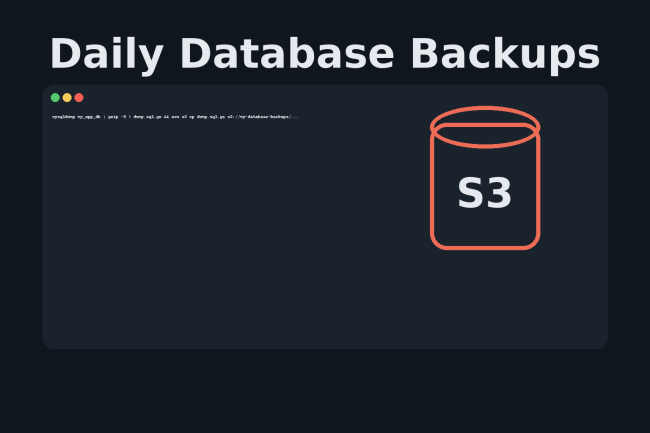
Keeping reliable database backups isn’t just a best practice; it’s critical. Whether you’re running a WordPress site, managing an internal app, or maintaining a client’s online store, losing your database could be catastrophic. Fortunately, you can automate MySQL backups to Amazon S3 and never have to think about it again. AWS offers tools like AWS…
When it comes to Linux server security, small oversights can turn into big vulnerabilities. One of the most overlooked risks is leaving unnecessary passwords on user accounts — especially the root account. In this guide, we’ll show you how to remove user passwords, lock accounts, and explain why these steps are essential for securing your…
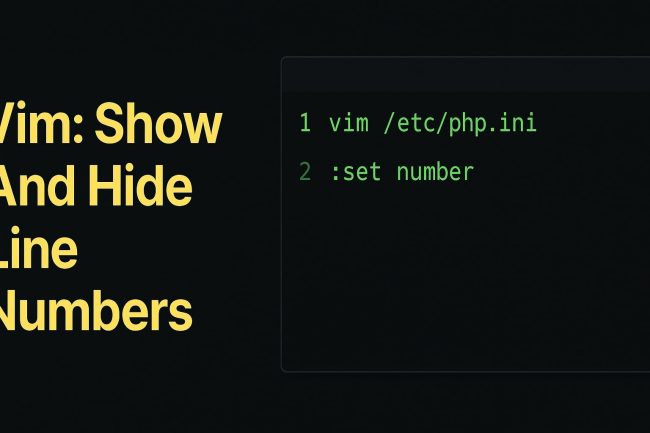
In this article, I will show you how to quickly show and hide line numbers in the Vim editor on Linux. When you are editing config files like php.ini or nginx.conf, being able to see the exact line number makes it much easier to follow error messages, share snippets with other developers, and jump straight…
In this short tutorial, I will show you how to display a ssh welcome banner that will show once a user successfully logs into your server/computer. I will also show you how to create a message once the connection is first established and before the user enters their password. Why would I want to do…